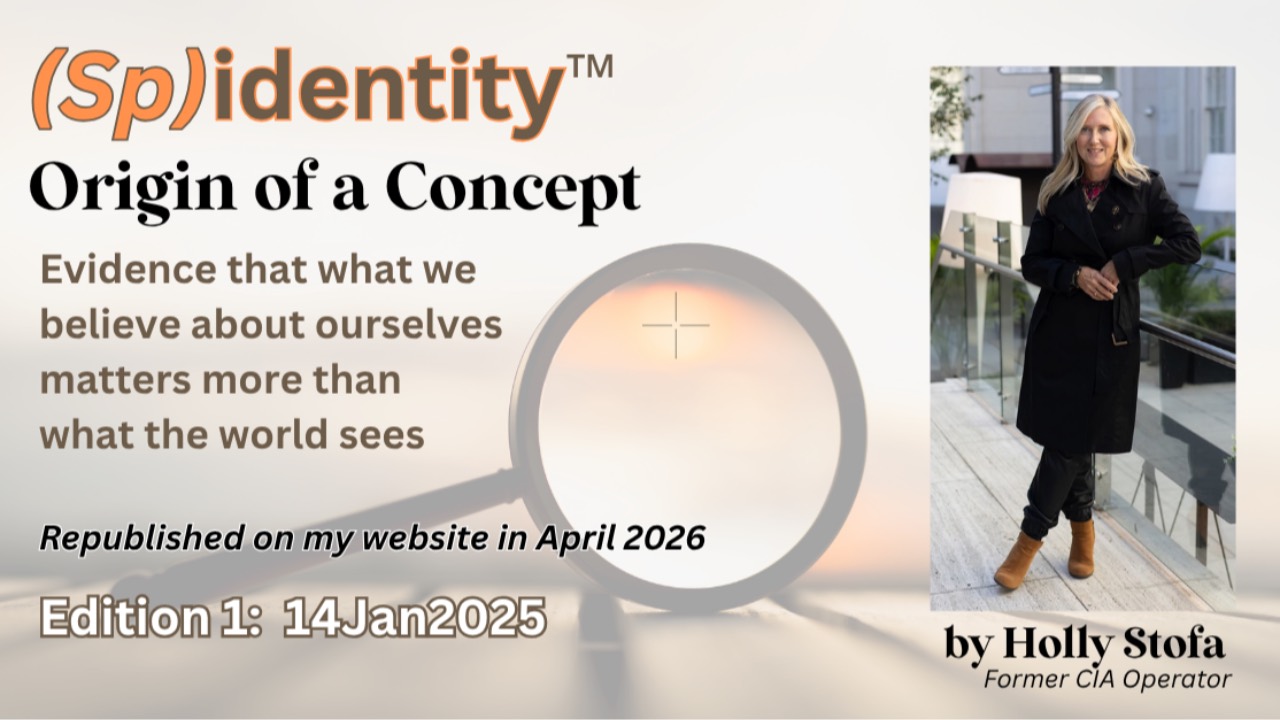
This newsletter explores the intersection of identity and performance in all its complexities. Everything is fair game ~ from self-belief to connection to the importance of relationships in fueling high performance. Who is it for? Chances are, if you’re reading this, it’s for you. It’s for leaders, high performers, and driven people who care deeply about what they do, sometimes at the expense or replacement of who they are.
You are killing yourself for a job that would replace you within a week if you dropped dead. Take care of yourself. ~ Jet Li
People who commit to doing their best sometimes lose sight of being and becoming their best. How are those things the same and how are they different? That’s what we’ll dissect over the coming year. You can expect to be challenged and inspired as you pursue becoming your absolute best, discovering peak performance and joy along the way, unlocking the courage to connect with self and others.
A few years ago, after more than two decades under cover at the CIA, I was captivated by the concept of how my identity would be affected when I moved on. Nearing a transition out of a career that had relied on my ability to build trust-based relationships through genuine connection with others, to perform when it mattered most, I now had the opportunity to look at what was left for and of myself. How well had I remained connected to myself? Had I held onto myself as well as I'd thought?
This line of inquiry led me to the broader question, how are identity and performance related? I began researching the topic with other former CIA case officers (which is ongoing). This newsletter is an extension of the research looking beyond our specific cadre. I wondered, too, about celebrities, athletes, surgeons, astronauts, etc.
In a 2022 Vogue article about her approach to retirement, Serena Williams said, "I'm evolving away from tennis, toward other things that are important to me...I’m going to miss that version of me, that girl who played tennis."
The concept of “becoming a former” is fascinating and complex. It's rooted deep in the concept of a major life transition with surface level context and terminology imposed. Do we ever really give up what we did as part of who we are? Or does it just become an integral part of our identity? Does that work for or against us? Or both… And while we’re still doing it, whatever it is, how does what we believe about ourselves ~ self-belief ~ affect how we do what we do and how well we do it? I believe one has everything to do with the other, in ways that can fuel or sabotage us going forward.
In those early days of first considering the topic, I asked a close friend and former colleague this question: How is it possible that when we walk out the doors of our headquarters for the final time, looking exactly the same to the outside world, who had never known our secret, that we could feel completely different? Somehow changed. Something no one else had known about us, but we had known about ourselves, that had allowed us to show up a certain way and move throughout our lives and the world, confident in who we were – performing at an elite level in high-stakes environments with real consequences.
But who were we, really? And how much did it relate, or not, to what we did? An, at times, all-consuming career which gave us a deep sense of internal pride. No outside accolades. And then how would we translate our skillset to what we could offer in the world outside the curtain if we couldn’t acknowledge what we did? Or rather, who we were, or both. Still not knowing the answers to these questions, I requested permission to acknowledge my true career. Not everyone does. I thought it would help me assimilate in the outside world. I chuckle as I think about realizing over the past two years how mistaken I was.
A truly strong person does not need the approval of others any more than a lion needs the approval of sheep. ~ @iamFearlessSoul
In some ways, the secret was easier. Knowing the truth about myself, without regard for whether others knew, without needing outside validation, OR having to explain myself or my career. There’s power in learning to live without the need for broad, outside approval. Many people will never attain that in today’s world.
It took me years to identify as a case officer and then it became integral to how I saw and felt about myself. Many of my closest friends were others who could understand the challenge. My job was pretty much the only part of my life that I didn’t openly share with others which was, in some ways, fine because I enjoy focusing on others more than myself. Yet, having to hold back a piece of myself inhibited me from pursuing some friendships I might have otherwise enjoyed. That was harder.
Connection is why we're here. It is what gives purpose and meaning to our lives. ~ Dr. Brene' Brown
This newsletter will be an iteration of these ongoing questions, ponderings, and research. It is intended to help other driven people, perhaps that’s you, separate who you are from what you do so that you can be the best at both. It’ll help you connect or reconnect to self, give yourself space to evolve and become the truest version of yourself, and to show up your best for others. Doing these things ultimately enables us to perform at our highest levels. Then, we all win. If this resonates with you, let’s explore together. I’m grateful for your time and subscription.
Wishing you joy, success, and connection,
Holly
Vogue article by Serena (on retirement)
If you're not already in, you’re welcome to join (Sp)identity™.
Join (Sp)identity™ here
Delivered monthly direct to your inbox.